![The Future of Music Production Is Human: 1,100+ Producers Reveal How AI Is Really Changing the Studio [2026 Survey]](https://blog-uploads.imgix.net/2026/01/sonarworks-producer-skills-research-report-2026-1000x750.jpg?auto=compress%2Cformat "The Future of Music Production Is Human: 1,100+ Producers Reveal How AI Is Really Changing the Studio [2026 Survey]")
For most of the past century, the role of a music producer encompassed a careful balance of craft, judgment, technical skill, and taste. Producers shaped performances, sculpted sound, managed personalities, and translated emotion into recordings. Technology has always played a role in that process, but it largely functioned as an extension of human intent. Consoles, tape machines, synthesizers, DAWs, and plugins responded to decisions made by people.
Artificial intelligence changes that relationship by introducing systems that can make decisions, not just perform routine tasks.
AI has entered the studio not as a speculative threat, but as a practical presence in modern production workflows. Today’s AI tools clean audio, separate stems, balance mixes, generate harmonies, and in some cases compose and arrange music with only a bit of human prompting. These systems are no longer experimental novelties. They are accessible, improving rapidly, and increasingly difficult to ignore.
The question facing music producers is no longer whether AI will affect music production, but how these tools are reshaping the meaning of professional value, and which human skills will continue to matter in a field where machines can increasingly make decisions.
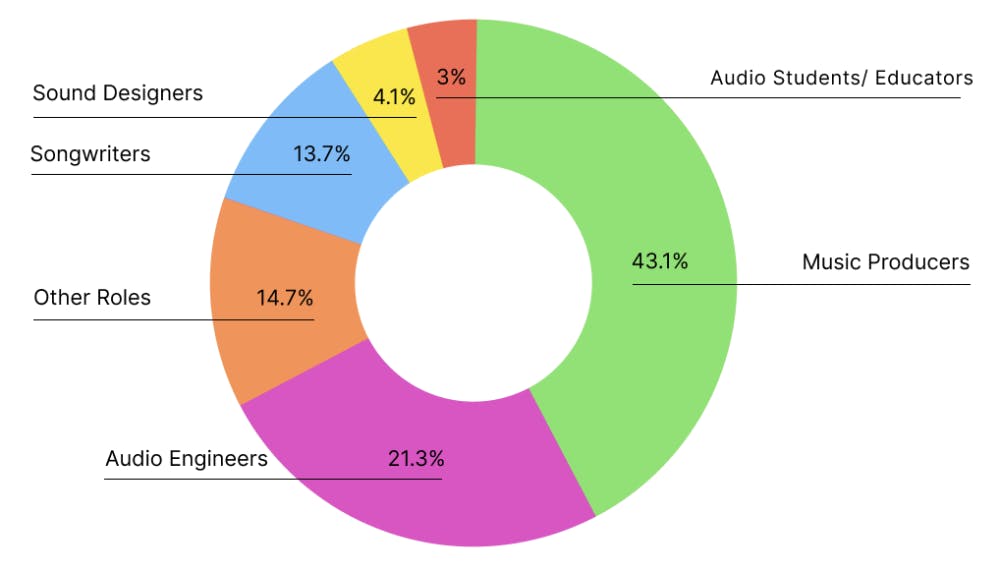
To explore these questions, we surveyed more than 1100 working music creators in partnership with Sound On Sound. Rather than focusing on consumers or casual users, the survey targeted experienced producers, engineers, songwriters, composers, mixers, educators, and content creators. What emerged is a story of cautious, evaluative engagement rather than clear enthusiasm or rejection.
Evaluation Mode
The survey asked producers how they are currently engaging with AI tools, and the responses revealed a community that is testing, experimenting, and observing—without rushing to commit. Many respondents indicate selective, task-specific use of AI tools, often used in limited ways, while withholding judgment about AI’s broader role.
Producers make a clear distinction between tools that assist with labor-intensive technical tasks and those that attempt to automate creative decision-making. Audio cleanup, noise reduction, stem separation, and session organization were commonly cited as areas where AI feels useful and non-threatening. Here, AI saves time, reduces friction, and frees attention for higher-level decisions.
By contrast, tools designed to generate lyrics, compose songs, or make aesthetic choices attracted significantly more skepticism. Producers generally express hesitance to delegate authorship or creative direction to apps, even when the results were technically impressive. The line between assistance and authorship matters deeply, and respondents prioritize retaining their creative control.
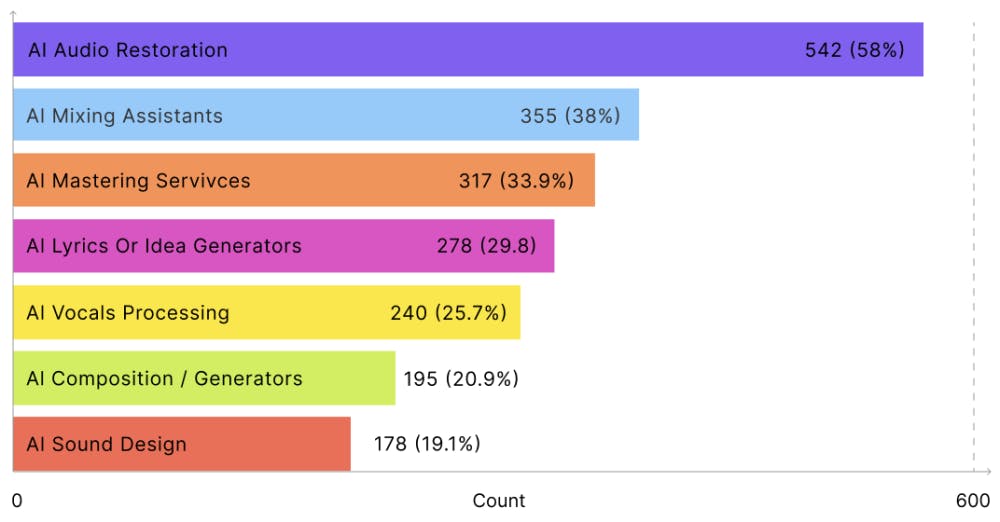
Their cautious experimentation suggests the industry is at an inflection point. Producers are not rejecting AI outright, but they are not simply embracing it. AI is being evaluated on its reliability, quality, and whether the platforms respect and value human creative control.
A Familiar Disruption—with New Implications
AI’s entry into the studio draws parallels to earlier moments of disruption: the rise of synthesizers, the move to digital recording, the emergence of DAWs, and the debates surrounding Auto-Tune.
In those cases, technology altered workflows and even shifted aesthetics without eliminating the need for traditional production skills. Those who adopted new tools discovered new creative possibilities, while those who resisted often found themselves falling behind. Most respondents believe AI will follow a similar trajectory—but with one important difference.
Unlike earlier tools, AI increasingly makes decisions rather than simply executing them. It doesn’t just record or process sound; it analyzes, predicts, and chooses. That shift—from tool to collaborator—explains much of the unease expressed in the survey.
Producers are accustomed to technology expanding their abilities and efficiency. They are far more cautious when technology decides what should be done. As a result, many respondents described their current stance as watchful and pragmatic rather than enthusiastic.
Anxiety About Originality
When the survey asked producers to identify their biggest concerns about AI in music, one theme emerged consistently: originality. Respondents widely highlight concerns that AI could accelerate musical sameness—flooding the market with palatable but generic-sounding content. Respondents note that music platform recommendation algorithms already lead to less diverse music discovery, prioritizing engagement over artistic depth or fairness.
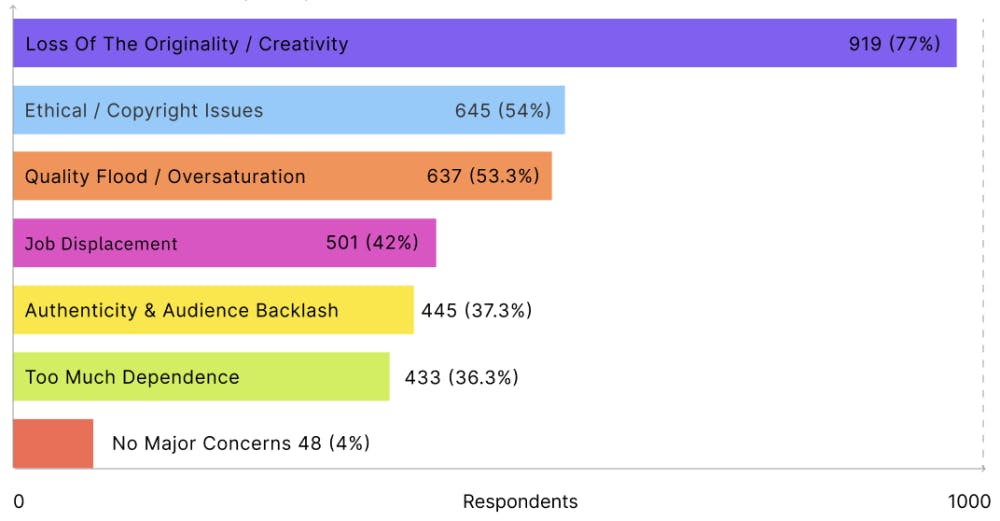
This anxiety outweighs concerns about job security. Producers worry less about being replaced outright than about music losing its sense of authorship, perspective, and emotional specificity. AI, in the hands of thoughtful producers, can expand possibilities, becoming a collaborative tool, rather than a stand-alone creation engine.
Ethics, Trust, and Professional Responsibility
The survey also explored how producers feel about the ethics behind AI tools—particularly how those systems are trained. Overall, respondents emphasize that the provenance of training data matters. Many producers view the use of ethically sourced AI as a professional obligation rather than a personal preference. Tools trained on unlicensed or scraped material are described as problematic, even if their outputs appear legal. For these respondents, such tools are frequently characterized as conflicting ethically with professional practice.
Producers want to know where AI tools come from, how they were built, and what creative rights they respect. Several respondents note that technical excellence is not enough to earn adoption; ethical transparency determines whether a tool feels acceptable in professional practice.
Whether producers should disclose the use of AI in musical productions reflects similar nuance. Few producers believe AI use should be hidden, but many express a desire for context-sensitive transparency. The concern is that audiences and clients may not distinguish between AI-assisted cleanup and AI-generated creative work, leading to mistrust or devaluing of the creative process.
Skills in Transition
One of the most revealing sections of the survey asked producers to reflect on how the value of different skills is changing. Respondents consistently point to a group of technical tasks that are becoming less central to the professional skillset. Manual audio editing, routine mix balancing, transcription, and other highly repeatable processes are frequently mentioned as areas where AI now performs competently and efficiently.
At the same time, respondents highlight skills they believe remain firmly human—and which are becoming more important. Musicality, critical listening, arrangement, emotional judgment, interpersonal communication, and creative direction are repeatedly cited as irreplaceable.
Several producers consistently elevate trust, empathy, and cultural understanding above automated tasks. The ability to guide artists, shape performances, and make aesthetic decisions in context remains central to the producer’s role. As automation increases, these skills become clearer differentiators rather than legacy traits.
The Producer’s Role, Reframed
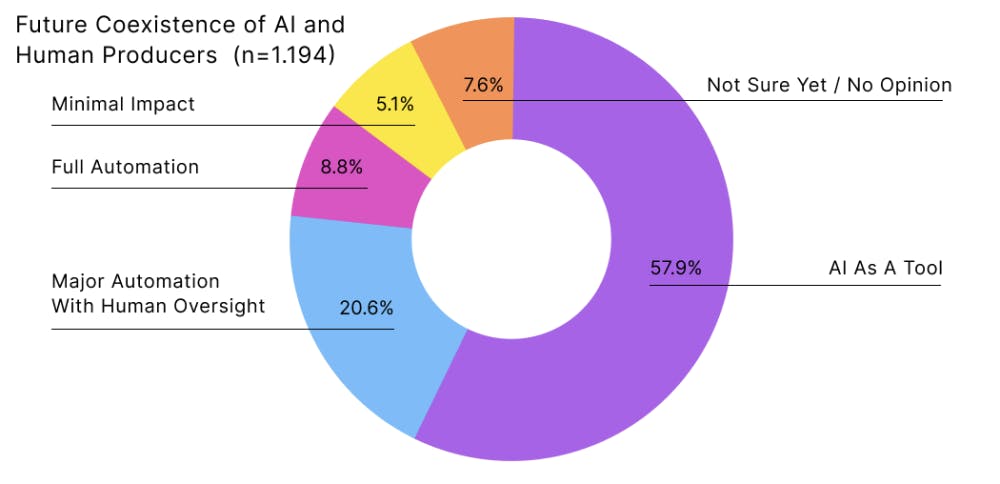
When asked to imagine the future of music production, most respondents do not support the idea of automation or algorithmic tools replacing human creators. Instead, they described a future in which AI functions as an assistant—handling routine tasks while humans retain creative authority.
Many producers envision their role evolving toward that of a creative director: someone who guides musicians, shapes aesthetic vision, and increasingly directs intelligent tools as part of the process. Technical fluency with AI will help to serve artistic intent rather than replacing it.
Producers also expect AI’s impact to vary by genre. Styles rooted in digital workflows and functional applications are seen as more susceptible to automation, while genres built on improvisation, ensemble interaction, and physical performance are viewed as more resistant. In these contexts, human presence is not just valued—it is essential.
What Comes Next
Overall, the survey shows a practical approach to AI.
Producers are not rejecting AI, but they look forward to it earning its place in the studio. They want tools that save time without flattening creativity, that respect artistic rights, and that reinforce rather than undermine human judgment. For producers, staying relevant will mean focusing less on mechanical execution and more on vision, taste, communication, and leadership. For developers and platforms, it means recognizing that music’s value does not lie in efficiency.
The consensus is that AI can make the process easier, but it should not decide what matters.
This overview captures the direction of the conversation, as reported in our survey. The full report includes detailed data, charts, and breakdowns, revealing how producers across genres feel about and currently interact with AI.